
The Complete Guide to Omega-3 Fatty Acids
By Cyrus Khambatta, PhD
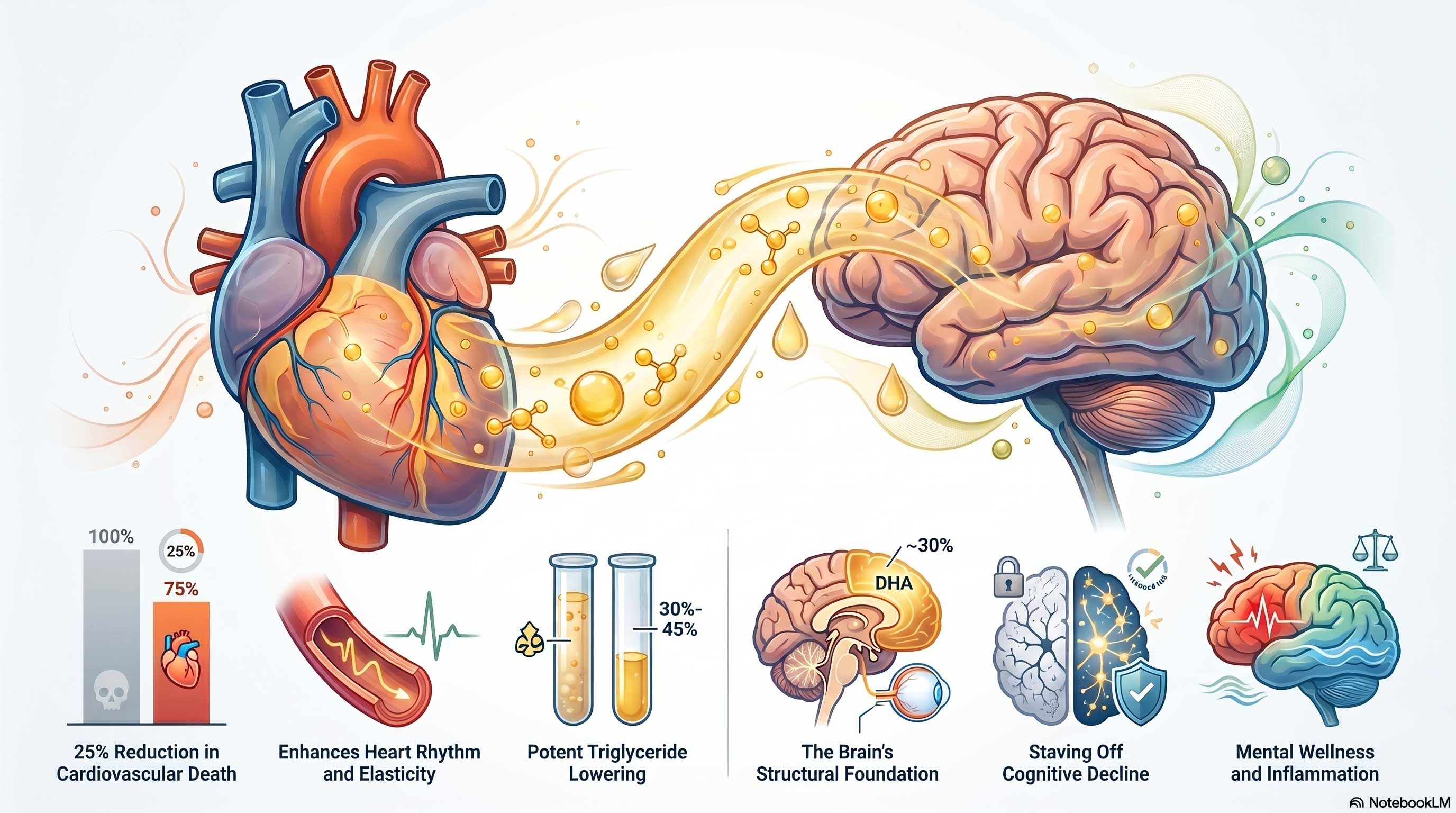
If you've ever been confused about omega-3 fatty acids – how much you need, where to get them, and whether they actually matter – you're not alone.
The conversation around omega-3s has been going on for decades, ever since researchers in the 1970s noticed something remarkable about the Greenland Inuit population: despite eating a diet extremely high in marine fat, their rates of heart attacks were significantly lower than those of Western populations.
That observation launched decades of research into the biological roles of four key omega-3 fatty acids:
Alpha-linolenic acid (ALA)
Eicosapentaenoic acid (EPA)
Docosapentaenoic acid (DPA)
Docosahexaenoic acid (DHA)
Those are some big words, so let’s use the acronyms moving forward.
Today, the data suggests that these fatty acids aren't just passive building blocks sitting in your cell membranes. They're active modulators of inflammation, vascular function, and brain health – and most people aren't getting nearly enough of them.
Let's break down the science.
Why You Can't Make Omega-3s From Scratch
The term "omega-3" refers to the position of the last double bond in the fatty acid's carbon chain – it sits at the third carbon from the methyl end. This structural feature gives omega-3 fatty acids a high degree of flexibility, which is critical for maintaining the fluidity of your cell membranes.
ALA is the plant-based omega-3 found in flaxseeds, chia seeds, and walnuts. Here's the important part: your body can't make ALA on its own because you lack the Δ12 and Δ15 desaturase enzymes required to synthesize it. That makes ALA an essential nutrient – you have to get it from food.
But here's where it gets tricky.
While ALA is the most common omega-3 in vegetarian and vegan diets, its real biological value depends on how efficiently your body can convert it into the longer-chain forms – EPA and DHA – which are the fatty acids responsible for most of the cardiovascular and neurological benefits.
The Conversion Problem: Why ALA Alone Isn't Enough
The conversion of ALA to EPA and DHA happens primarily in your liver through a series of enzymatic steps known as the Sprecher Pathway. The process starts with the Δ6 desaturase enzyme converting ALA to stearidonic acid (SDA) – and this is the rate-limiting step, meaning it's the bottleneck of the entire pathway.
From there, SDA gets elongated and further desaturated to form EPA. The synthesis of DHA is even more complex, requiring two additional elongations, a final Δ6 desaturation, and a trip to the peroxisomes for beta-oxidation.
The research shows that this conversion process is remarkably inefficient. Less than 8% of ALA gets converted to EPA, and less than 4% makes it all the way to DHA.
Therefore, relying solely on ALA from plant sources often doesn't achieve the tissue concentrations of EPA and DHA necessary for optimal cardiovascular and neurological protection.
The Resolution of Inflammation: Where Omega-3s Shine
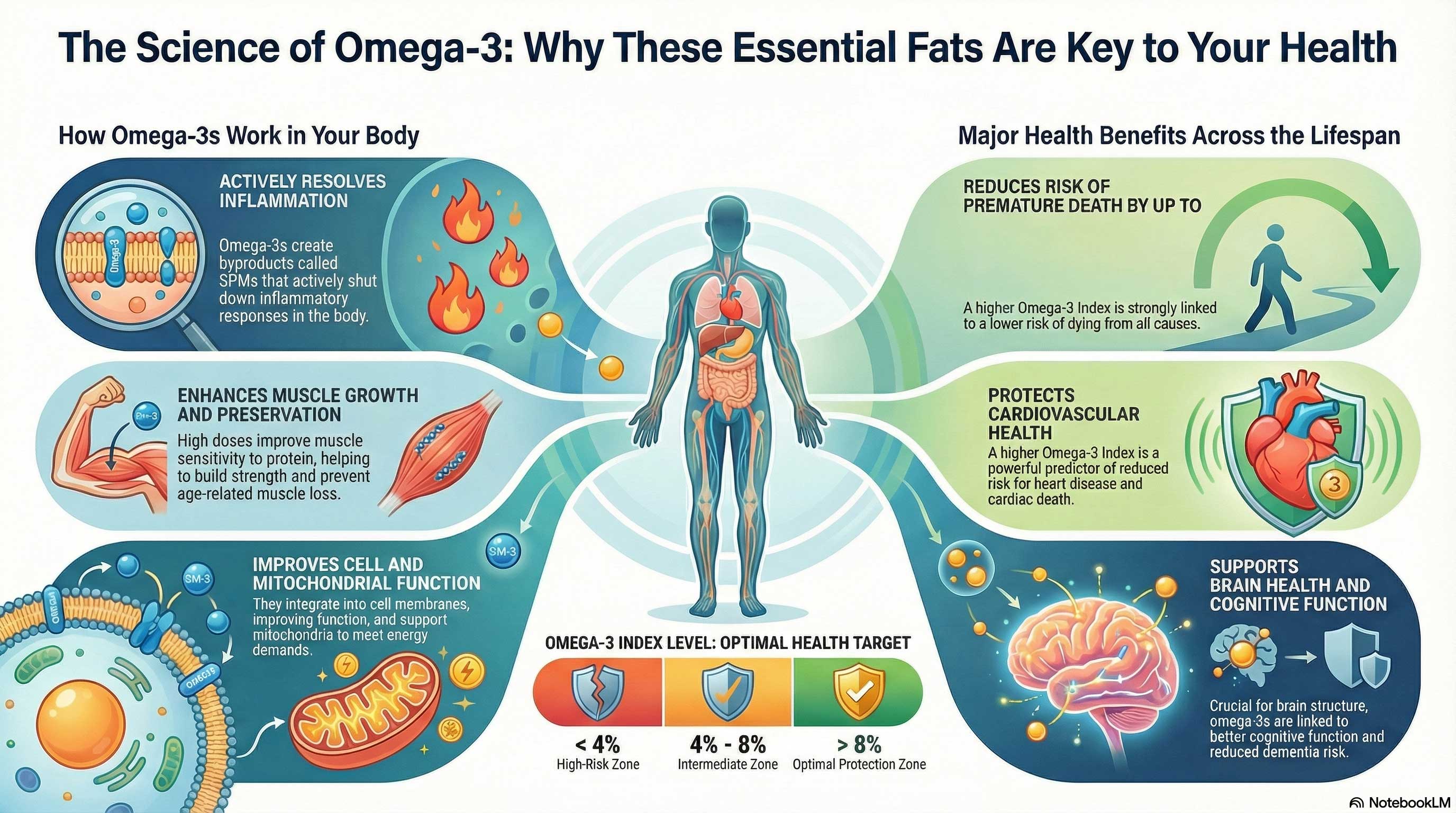
The fatty acid composition of your cell membranes directly determines the types of signaling molecules your immune system produces during an inflammatory response.
From omega-6 (arachidonic acid): Your body produces 2-series prostaglandins and 4-series leukotrienes – potent initiators of inflammation that promote blood clotting, vasoconstriction, and white blood cell recruitment
From omega-3 (EPA and DHA): Your body produces 3-series prostaglandins and 5-series leukotrienes, which have lower inflammatory potency
But here's the most important part: EPA and DHA are also the precursors to a class of molecules called Specialized Pro-resolving Mediators (SPMs) – including resolvins, protectins, and maresins.
SPMs don't just block inflammation the way a drug like ibuprofen does. They actively resolve it. They facilitate the clearance of cellular debris, limit neutrophil infiltration, and promote tissue repair.
Without adequate EPA and DHA, the inflammatory response can remain in an unresolved, chronic state – and the data suggests that this contributes to the development of cardiovascular disease, neurodegeneration, and metabolic syndrome.
Cardiovascular Health: What the Clinical Trials Actually Show
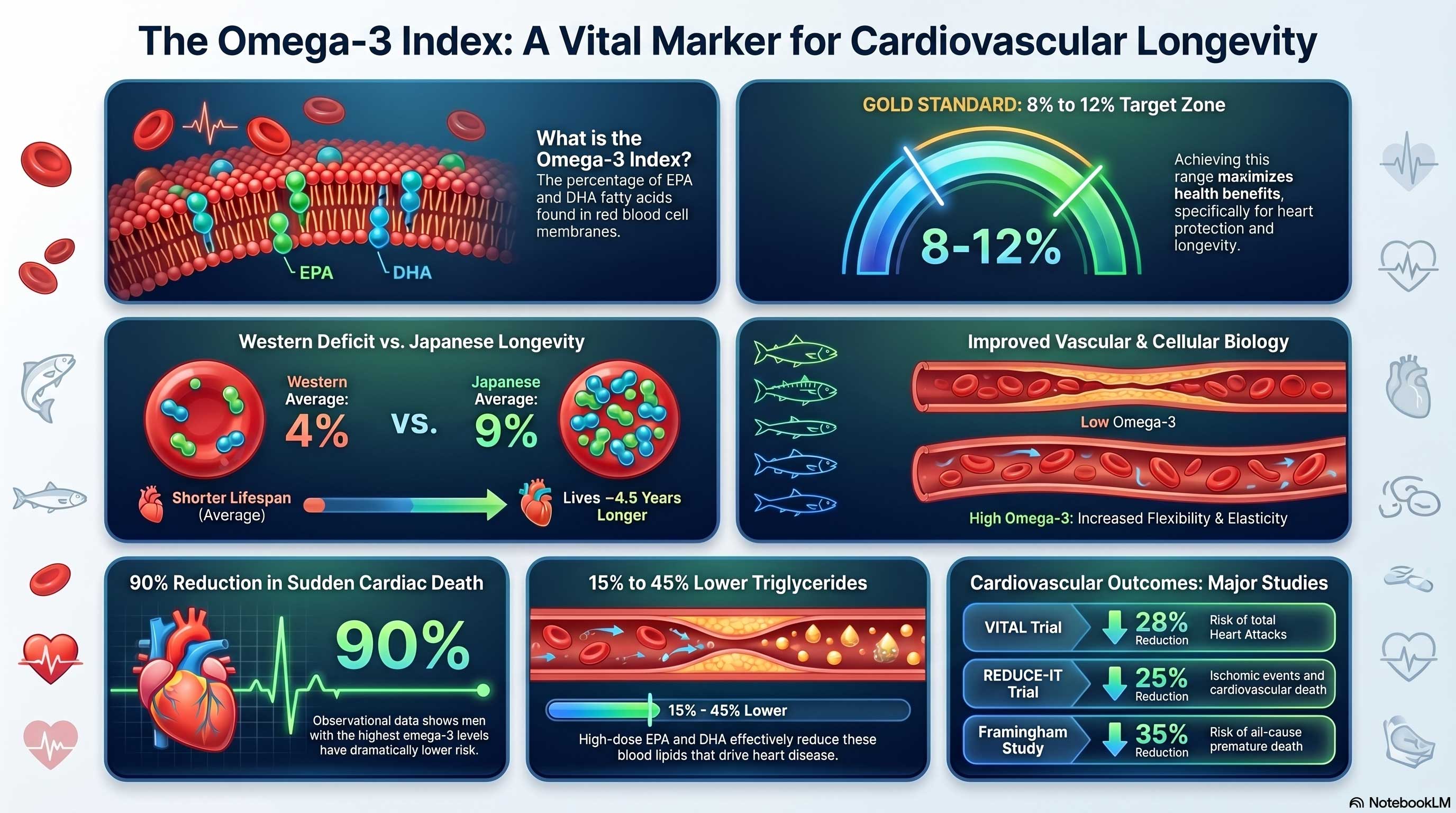
The cardioprotective potential of omega-3s has been studied extensively, and the results are both encouraging and nuanced.
Anti-Arrhythmic Effects
Sudden cardiac death is often the result of fatal ventricular arrhythmias. EPA and DHA modulate the function of cardiac ion channels – including sodium, L-type calcium, and the Na⁺-Ca²⁺ exchanger – which stabilizes the cardiomyocyte membrane and increases the threshold for electrical depolarization.
Data from the Framingham Heart Study shows that higher circulating omega-3 levels are inversely associated with sudden cardiac death. A comprehensive meta-analysis found that high levels of EPA+DPA+DHA were associated with a 45% lower risk of sudden cardiac death.
The Key Clinical Trials
Here's where the conversation gets interesting, because not all trials have shown the same results – and the reasons why matter:
REDUCE-IT (2019): High-dose purified EPA (4 g/day) in patients with elevated triglycerides and high cardiovascular risk. Result: a 25% relative reduction in the primary composite endpoint of cardiovascular death, MI, stroke, revascularization, or unstable angina.
JELIS: Conducted in a Japanese population with high baseline fish intake, using purified EPA. Result: significant reduction in major coronary events.
VITAL and ASCEND: Moderate dose (~1 g/day) of combined EPA+DHA. Result: didn't significantly reduce primary composite endpoints, though VITAL noted a 28% reduction in total MI risk.
STRENGTH and OMEMI (2020): Combined EPA+DHA (up to 4 g/day). Result: null findings. This has sparked debate about whether the benefits are specific to EPA monotherapy, or whether the choice of placebo (mineral oil in REDUCE-IT vs. corn oil in STRENGTH) influenced outcomes.
An updated meta-analysis of 38 RCTs involving over 149,000 participants concluded that omega-3 supplementation significantly reduces:
Cardiovascular mortality
Non-fatal MI
Coronary heart disease events
Notably, the risk reduction was more pronounced in studies using EPA alone compared to combined EPA+DHA therapy.
Triglyceride Lowering
High doses (≥2 g/day) of omega-3s can lower triglyceride levels by 15% to 50% by enhancing hepatic fatty acid oxidation and reducing the synthesis of very-low-density lipoproteins (VLDL). They also improve endothelial function, modestly lower blood pressure, and increase the stability of atherosclerotic plaques.
Brain Health: From Fetal Development to Dementia Prevention
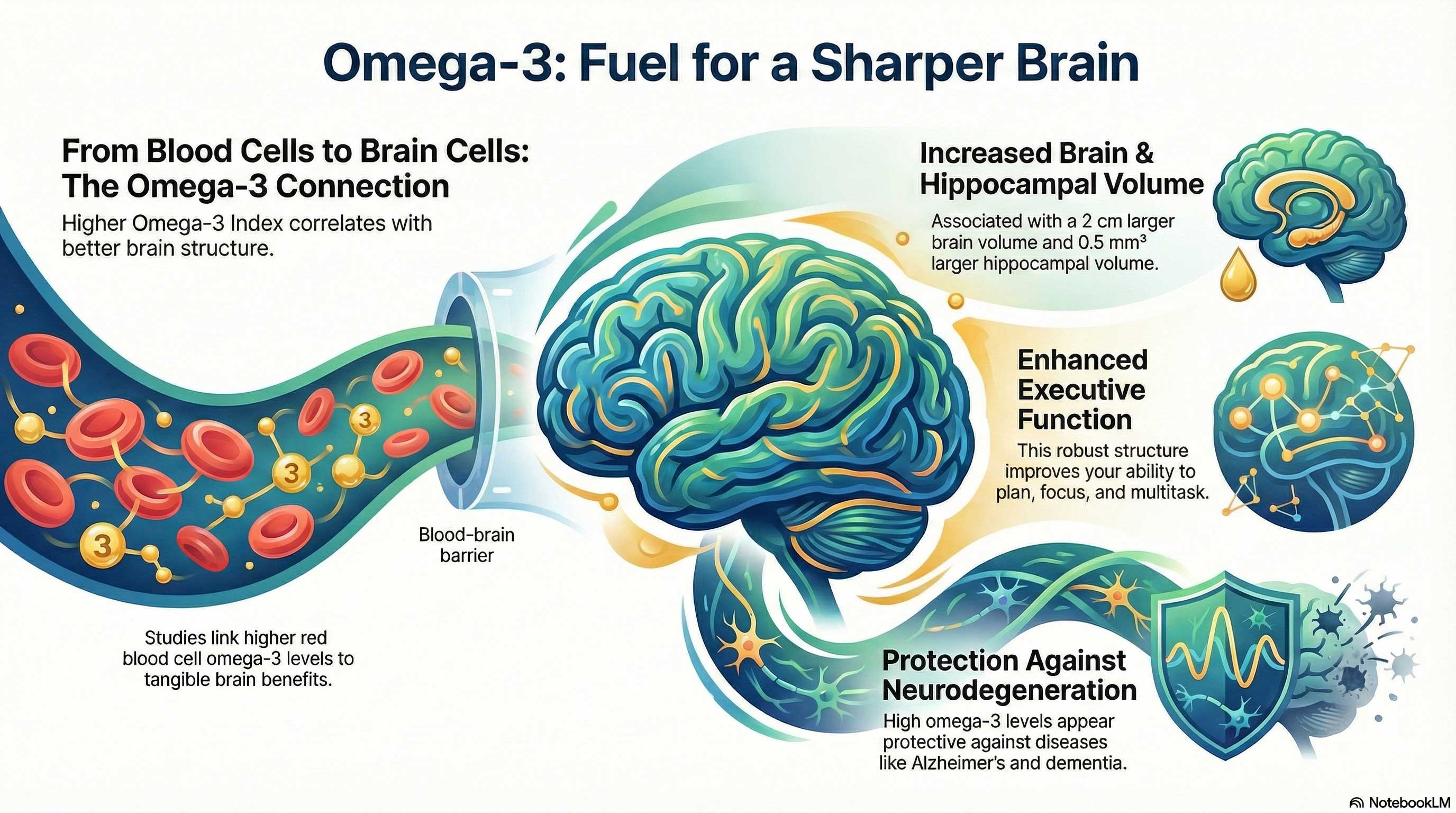
Your brain is defined by its high lipid content, and DHA is the most abundant omega-3 fatty acid in the brain, accounting for 20-30% of total brain fatty acid weight.
Cognitive Development
During fetal development and early infancy, DHA is essential for neurogenesis, synaptogenesis, and the maturation of visual function. The data suggests that infants born to mothers with higher DHA status during pregnancy and lactation exhibit better visual acuity in early childhood. DHA and EPA have also been explored as adjunct treatments for ADHD, with some evidence suggesting that lower omega-3 levels correlate with higher symptom severity.
Dementia Risk
Evidence from the UK Biobank is particularly compelling:
An analysis of over 217,000 adults found that individuals in the highest quintile of blood omega-3 levels had a 35-40% lower risk of developing early-onset dementia (diagnosed before age 65) – regardless of genetic risk status (APOE-ε4)
Higher DHA levels are associated with better microstructural integrity of white and gray matter and superior executive function in middle-aged and older adults
Omega-3s may slow cognitive decline in those at high genetic or clinical risk for Alzheimer's, likely through the reduction of neuroinflammation and the promotion of synaptic plasticity
Mental Health
EPA appears to have a unique role in mood regulation, likely due to its anti-inflammatory effects. EPA supplementation has shown benefit as an adjunct treatment for major depressive disorder and may reduce anxiety. Higher plasma omega-3 levels are also associated with a reduced risk of passive suicidal ideation.
Retinal Health: Why Your Eyes Need DHA
The retina contains the highest concentration of DHA in the entire human body, particularly within the rod outer segments of photoreceptor cells.
DHA's unique physical properties – its high number of double bonds and low bending rigidity – allow for the membrane flexibility required for the rapid conformational changes of rhodopsin during phototransduction. Research using LPAAT3-knockout mice has shown that a loss of DHA leads to incomplete elongation of the outer segment, disordered disc morphology, and impaired visual function.
Dietary omega-3 intake is also associated with a reduced risk of age-related macular degeneration (AMD), the leading cause of blindness in older adults. DHA protects retinal cells from oxidative stress and light-induced apoptosis, potentially by serving as a precursor to neuroprotectin D1.
Testing Your Omega-3 Status: Which Test Should You Use?
As the clinical importance of omega-3 status becomes clearer, accurate testing matters. There are three primary blood fractions used for assessment: plasma/serum, whole blood, and red blood cell (RBC) membranes.
The RBC Omega-3 Index
The Omega-3 Index, developed by Dr. Bill Harris and Dr. Clemens von Schacky, measures the percentage of EPA and DHA in the red blood cell membrane. It's considered the clinical gold standard for several reasons:
Long-term stability: Because red blood cells live for approximately 120 days, the RBC index reflects your average omega-3 intake over the previous 3-4 months – similar to how HbA1c reflects blood glucose control
Minimal meal bias: Unlike plasma tests, the RBC index isn't affected by what you ate yesterday
Tissue correlation: The RBC index correlates strongly with the omega-3 content of your heart, liver, and muscle
What is an Optimal Omega 3 Level?
No formal Recommended Dietary Allowance (RDA) has been set for EPA and DHA. Instead, health authorities provide "Adequate Intake" (AI) values based on ALA consumption:
Adult males: 1.6 g/day ALA
Adult females: 1.1 g/day ALA
Pregnancy: 1.4 g/day ALA
Lactation: 1.3 g/day ALA
The European Food Safety Authority (EFSA) and WHO provide more specific guidance for long-chain omega-3s, typically recommending a minimum of 250-500 mg per day of EPA+DHA for healthy adults. During pregnancy, some guidelines recommend up to 1 g per day of DHA to reduce the risk of early preterm birth.
The 8% Omega 3 Index Target
Dr. Bill Harris and other researchers argue that dietary guidelines should be based on achieving a target blood level rather than a generic intake amount – and I agree with this approach. The degree of inter-individual variability in absorption and metabolism is significant, so a one-size-fits-all intake recommendation doesn't make sense.
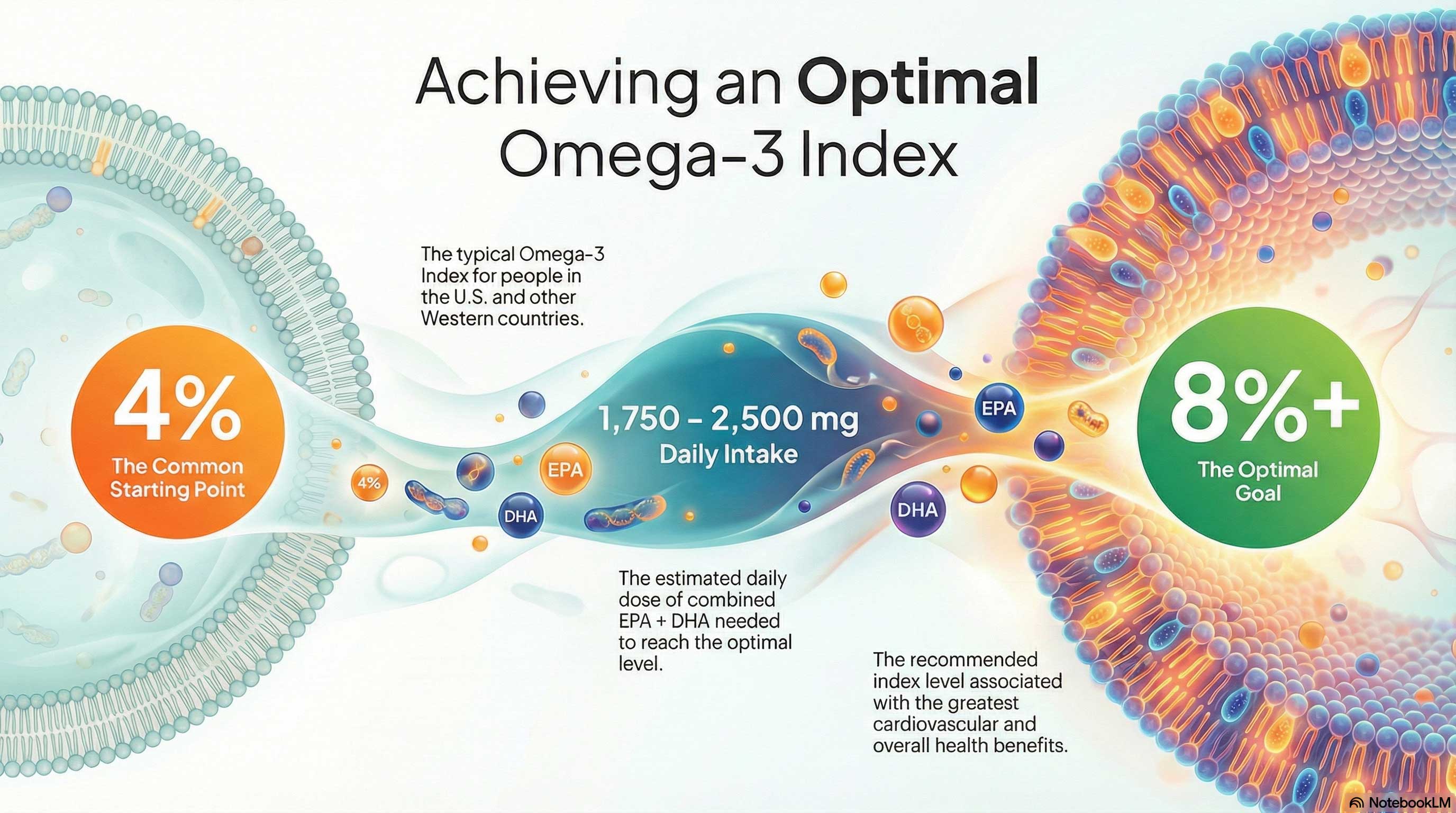
The clinical evidence suggests that an Omega-3 Index of 8-12% provides the maximum health benefits for cardiovascular and brain health:
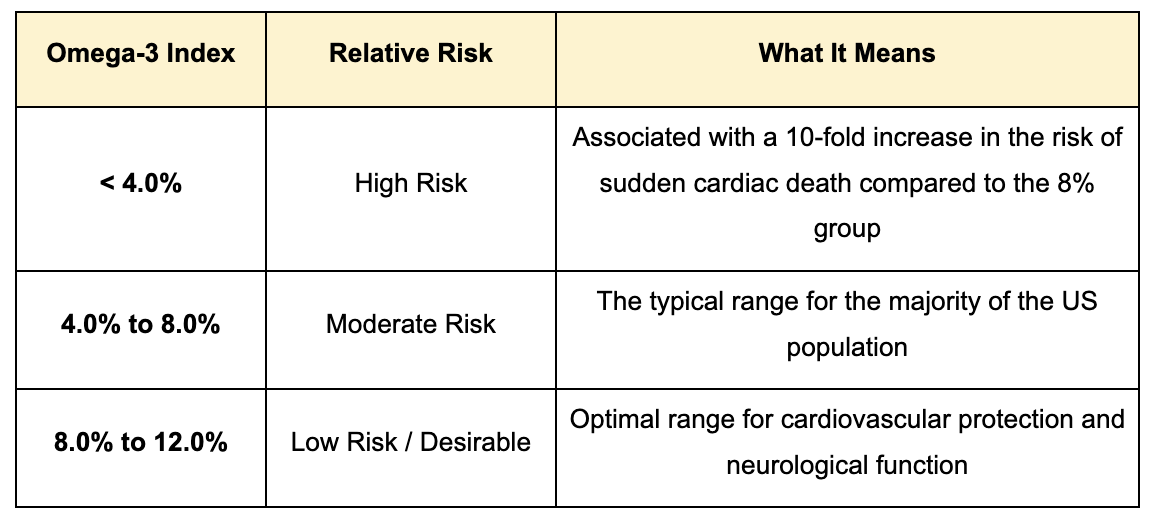
To raise your index from a baseline of 4% to the target 8%, an average daily intake of 1.75-2.5 g of EPA+DHA is typically required over a period of 3-4 months.
The Long-Term Risks of Suboptimal Omega 3 Status
The long-term consequences of a chronically low omega-3 status are significant. This isn't about sub-optimal performance – the data suggests that omega-3 deficiency is a major dietary risk factor for premature mortality.
In the Framingham Heart Study, the Omega-3 Index was as strong a predictor of all-cause mortality as smoking status. Individuals with an index in the highest quintile had a 35% lower risk of death from all causes compared to those in the lowest quintile. Dr. Bill Harris has noted that maintaining an 8% index vs. a 4% index is associated with an additional five years of life expectancy.
Chronic deficiency sets the stage for:
Cardiovascular burden: Low EPA and DHA levels are associated with higher ischemic heart disease disability and death, contributing to millions of lost disability-adjusted life years (DALYs) globally
Neurological decline: Chronic deficiency is linked to accelerated brain volume loss and the early onset of dementia symptoms
Metabolic dysfunction: Inadequate omega-3 status can contribute to fatty liver disease and insulin resistance, though supplementation is most effective at prevention rather than reversing established disease
Practical Recommendations
Based on the collective weight of the research, here's what I recommend:
Prioritize direct sources of EPA and DHA. Focus on oily fish (salmon, sardines, mackerel) or high-quality microalgal oil to bypass the inefficient ALA-to-EPA/DHA conversion pathway.
Get your Omega-3 Index tested. Use the RBC-based Omega-3 Index as a stable, 3-month indicator of your status, rather than plasma-based tests that are susceptible to recent meal bias.
Aim for 8%. Target an Omega-3 Index between 8% and 12% to achieve the maximum protective benefits for your heart and brain.
Individualize your dosage. Use initial testing and 4-month re-testing to determine the supplemental intake (often 1.5-3 g/day) necessary to reach the 8% target. One dose doesn't fit all.
Understand the mechanism. The primary benefit of omega-3s isn't just blocking pro-inflammatory pathways – it's the active resolution of inflammation via SPMs. This is a fundamentally different mechanism than what anti-inflammatory drugs do.
Optimizing your omega-3 status is one of the most powerful, low-cost interventions available for the prevention of chronic disease.
As diagnostic testing becomes more accessible and standardized, integrating the Omega-3 Index into routine clinical practice will be essential for addressing the global burden of inflammatory and cardiovascular conditions.
References
Omega-3 fatty acid supplementation and cardiovascular disease: Thematic Review Series - PMC, accessed February 25, 2026, https://pmc.ncbi.nlm.nih.gov/articles/PMC3494243/
N-3 Fatty Acids (EPA and DHA) and Cardiovascular Health - Updated Review of Mechanisms and Clinical Outcomes - PMC, accessed February 25, 2026, https://pmc.ncbi.nlm.nih.gov/articles/PMC12628397/
Mode and Mechanism of Action of Omega-3 and Omega-6 Unsaturated Fatty Acids in Chronic Diseases - PMC, accessed February 25, 2026, https://pmc.ncbi.nlm.nih.gov/articles/PMC12073370/
Omega-3 and Omega-6 Fatty Acid Synthesis, Metabolism, Functions - The Medical Biochemistry Page, accessed February 25, 2026, https://themedicalbiochemistrypage.org/omega-3-omega-6-fatty-acid-synthesis-metabolism-functions/
Mode and Mechanism of Action of Omega-3 and Omega-6 Unsaturated Fatty Acids in Chronic Diseases - ResearchGate, accessed February 25, 2026, https://www.researchgate.net/publication/391374955_Mode_and_Mechanism_of_Action_of_Omega-3_and_Omega-6_Unsaturated_Fatty_Acids_in_Chronic_Diseases
FADS1 and FADS2: Omega-3 and Omega-6 Fatty Acids - Genetic Lifehacks, accessed February 25, 2026, https://www.geneticlifehacks.com/omega-3-vs-omega-6-fats-and-your-genes/
(PDF) Omega-3 Fatty Acids: Biochemical Significance, Deficiency Implications, and Strategies for Health Optimization - ResearchGate, accessed February 25, 2026, https://www.researchgate.net/publication/392392805_Omega-3_Fatty_Acids_Biochemical_Significance_Deficiency_Implications_and_Strategies_for_Health_Optimization
What are the Benefits of ALA & Does the Body Convert it into DHA & EPA? | Nutriterra, accessed February 25, 2026, https://www.nutriterraomega3.com/blog/benefits-ala-body-convert-ala-dha-epa
Omega-3 Fatty Acids - Health Professional Fact Sheet - Academy of Pediatric Integrative Medicine, accessed February 25, 2026, https://apim.org/wp-content/uploads/2024/02/NIH_Health-Professional-Fact-Sheet_-Omega-3-Fatty-Acids-.pdf
Metabolism and functional effects of plant-derived omega-3 fatty acids in humans - PubMed, accessed February 25, 2026, https://pubmed.ncbi.nlm.nih.gov/27496755/
Health Implications of High Dietary Omega-6 Polyunsaturated Fatty ..., accessed February 25, 2026, https://pmc.ncbi.nlm.nih.gov/articles/PMC3335257/
What impacts the conversion of alpha-linolenic acid to DHA and EPA? - Examine.com, accessed February 25, 2026, https://examine.com/faq/what-impacts-the-conversion-of-alpha-linolenic-acid-to-dha-and-epa/
Omega‐3 polyunsaturated fatty acids and inflammatory processes: nutrition or pharmacology? - PMC - NIH, accessed February 25, 2026, https://pmc.ncbi.nlm.nih.gov/articles/PMC3575932/
Long-chain omega-3 fatty acids and the brain: a review of the independent and shared effects of EPA, DPA and DHA - PMC, accessed February 25, 2026, https://pmc.ncbi.nlm.nih.gov/articles/PMC4404917/
Omega-3 Fatty Acids - Health Professional Fact Sheet - Office of Dietary Supplements (ODS), accessed February 25, 2026, https://ods.od.nih.gov/factsheets/Omega3FattyAcids-HealthProfessional/
Omega-3 Index - FoundMyFitness Topic, accessed February 25, 2026, https://www.foundmyfitness.com/topics/omega-3-index
5 Key Takeaways From the Experts on Omega-3's - Premier Catch, accessed February 25, 2026, https://www.premiercatch.com/blogs/seafood-nutrition/5-key-takeaways-from-dr-andrew-huberman-dr-rhonda-patrick-on-omega-3s
68 Dr. Bill Harris on the Omega-3 Index, Increasing Omega-3 to Improve Longevity & Heart Disease Risk - FoundMyFitness, accessed February 25, 2026, https://www.foundmyfitness.com/episodes/bill-harris
Comparative Bioavailability of DHA and EPA from Microalgal and Fish Oil in Adults - MDPI, accessed February 25, 2026, https://www.mdpi.com/1422-0067/26/19/9343
Is omega-3 beneficial because it resolves inflammation? - FoundMyFitness, accessed February 25, 2026, https://www.foundmyfitness.com/episodes/omega-3-resolves-inflammation
Effects of Omega-3 Fatty Acids on Immune Cells - PMC - NIH, accessed February 25, 2026, https://pmc.ncbi.nlm.nih.gov/articles/PMC6834330/
Effect of omega-3 fatty acids on cardiovascular outcomes: A systematic review and meta-analysis - PMC, accessed February 25, 2026, https://pmc.ncbi.nlm.nih.gov/articles/PMC8413259/
Cardiovascular Outcome of Omega-3 Fatty Acids: A systematic Review, accessed February 25, 2026, https://healthcare-bulletin.co.uk/article/cardiovascular-outcome-of-omega-3-fatty-acids-a-systematic-review-2301/
Omega-3 Fatty Acids as Potential Predictors of Sudden Cardiac ..., accessed February 25, 2026, https://pmc.ncbi.nlm.nih.gov/articles/PMC11722046/
(n-3) Fatty Acids and Cardiovascular Health: Are Effects of EPA and DHA Shared or Complementary? - PMC, accessed February 25, 2026, https://pmc.ncbi.nlm.nih.gov/articles/PMC3278271/
Do patients benefit from omega-3 fatty acids? | Cardiovascular Research - Oxford Academic, accessed February 25, 2026, https://academic.oup.com/cardiovascres/article/119/18/2884/7585216
Marine Omega‐3 Supplementation and Cardiovascular Disease: An Updated Meta‐Analysis of 13 Randomized Controlled Trials Involving 127 477 Participants, accessed February 25, 2026, https://www.ahajournals.org/doi/10.1161/JAHA.119.013543
Study Details | NCT04088240 | Effects of Omega-3 ..., accessed February 25, 2026, https://clinicaltrials.gov/study/NCT04088240
Are you getting enough omega-3 fatty acids? - American Heart Association, accessed February 25, 2026, https://www.heart.org/en/news/2023/06/30/are-you-getting-enough-omega-3-fatty-acids
The Highest Omega-3 Dose Ever Studied (25 grams per day), accessed February 25, 2026, https://www.foundmyfitness.com/episodes/highest-omega-3-dose
Effects of omega-3 fatty acid on major cardiovascular outcomes: A systematic review and meta-analysis - ResearchGate, accessed February 25, 2026, https://www.researchgate.net/publication/362364702_Effects_of_omega-3_fatty_acid_on_major_cardiovascular_outcomes_A_systematic_review_and_meta-analysis
Higher blood omega-3 levels linked to lower risk of early-onset dementia, study finds, accessed February 25, 2026, https://nutraceuticalbusinessreview.com/higher-blood-omega-3-levels-linked-lower-dementia-risk
Omega-3 fatty acids: multi-target mechanisms and therapeutic applications in neurodevelopmental disorders and epilepsy - Frontiers, accessed February 25, 2026, https://www.frontiersin.org/journals/nutrition/articles/10.3389/fnut.2025.1598588/full
Omega-3 Index Complete Test | OmegaQuant Education, accessed February 25, 2026, https://education.omegaquant.com/omega-3-index-complete-test/
Fish and Omega-3 Fatty Acids: Sex and Racial Differences in ..., accessed February 25, 2026, https://pmc.ncbi.nlm.nih.gov/articles/PMC10794037/
Omega-3 Supplements: What You Need To Know | NCCIH - NIH, accessed February 25, 2026, https://www.nccih.nih.gov/health/omega3-supplements-what-you-need-to-know
What does the latest research reveal about omega-3s and human health?, accessed February 25, 2026, https://www.nutritionaloutlook.com/view/what-does-the-latest-research-reveal-about-omega-3s-and-human-health-
A systematic review and dose response meta analysis of Omega 3 supplementation on cognitive function - PMC, accessed February 25, 2026, https://pmc.ncbi.nlm.nih.gov/articles/PMC12368174/
Roles of the Unsaturated Fatty Acid Docosahexaenoic Acid in the Central Nervous System: Molecular and Cellular Insights - MDPI, accessed February 25, 2026, https://www.mdpi.com/1422-0067/23/10/5390
The negative association between the docosapentaenoic acid intake and the incidence of AMD based on NHANES 2005–2008 - Frontiers, accessed February 25, 2026, https://www.frontiersin.org/journals/nutrition/articles/10.3389/fnut.2024.1435775/full
Effects of docosahexaenoic acid on retinal development: cellular and molecular aspects - PubMed, accessed February 25, 2026, https://pubmed.ncbi.nlm.nih.gov/11724465/
Docosahexaenoic acid preserves visual function by maintaining correct disc morphology in retinal photoreceptor cells - PubMed, accessed February 25, 2026, https://pubmed.ncbi.nlm.nih.gov/28578316/
Docosahexaenoic acid preserves visual function by maintaining correct disc morphology in retinal photoreceptor cells - PMC - NIH, accessed February 25, 2026, https://pmc.ncbi.nlm.nih.gov/articles/PMC5519357/
Omega-3 fatty acids - FoundMyFitness Topic, accessed February 25, 2026, https://www.foundmyfitness.com/topics/omega-3
High levels of retinal membrane docosahexaenoic acid increase susceptibility to stress-induced degeneration - PMC, accessed February 25, 2026, https://pmc.ncbi.nlm.nih.gov/articles/PMC2666167/
OmegaQuant Lab Comparison 1-pager, accessed February 25, 2026, https://omegaquant.com/wp-content/uploads/2024/05/OmegaQuant-Lab-Comparison-1-pager.pdf
The HS-Omega-3 Index Methodological Considerations - OmegaQuant, accessed February 25, 2026, https://omegaquant.com/wp-content/uploads/2013/09/omegaquant_methodological.pdf
What is the Omega-3 Index? - FoundMyFitness, accessed February 25, 2026, https://www.foundmyfitness.com/episodes/omega-3-index
Your Omega-3 Index - OmegaQuant - Lab Results explained | HealthMatters.io, accessed February 25, 2026, https://healthmatters.io/understand-blood-test-results/your-omega-3-index
Is the omega-3 index a valid marker of intestinal membrane phospholipid EPA+DHA content? - PMC, accessed February 25, 2026, https://pmc.ncbi.nlm.nih.gov/articles/PMC4127132/
OmegaCheck Test - Ulta Lab Tests, accessed February 25, 2026, https://www.ultalabtests.com/test/omegacheck-test
Description Clinical Use Clinical Significance Testing Frequency Specimen Type Commercial Insurance or Medicare Coverage CPT Cod - Cleveland HeartLab, accessed February 25, 2026, https://www.clevelandheartlab.com/wp-content/uploads/2018/12/CHL-D052-DEC2018-OmegaCheck-Practitioner-One-Pager.pdf
OmegaCheck | Test Summary - Quest Diagnostics, accessed February 25, 2026, https://testdirectory.questdiagnostics.com/test/test-guides/TS_OmegaCheck/omegacheck
Omega-3 Index is Directly Associated with a Healthy Red Blood Cell Distribution Width, accessed February 25, 2026, https://www.medrxiv.org/content/10.1101/2021.10.22.21264652v1.full
How much omega-3 do you need daily? New global review reveals ..., accessed February 25, 2026, https://www.news-medical.net/news/20251210/How-much-omega-3-do-you-need-daily-New-global-review-reveals-DHA-and-EPA-requirements.aspx
Low dietary omega-3 intake linked to increased ischemic heart disease burden, accessed February 25, 2026, https://www.news-medical.net/news/20250320/Low-dietary-omega-3-intake-linked-to-increased-ischemic-heart-disease-burden.aspx
Study Details | NCT06533891 | Effects of Omega-3 Fatty Acid Supplementation and Physical Training on Metabolic Health | ClinicalTrials.gov, accessed February 25, 2026, https://clinicaltrials.gov/study/NCT06533891?term=AREA%5BConditionSearch%5D(%22Insulin%20Resistance%22)&rank=6
